Arizona heat, by the numbers
Phoenix’s average high temperatures run about 105–107°F from June through August, heat that pushes roofs to their limits. Many summers also deliver long runs of 110°F+ days, including record‑setting stretches in recent years.
What happens on the roof? On a sunny summer afternoon, a conventional dark roof commonly reaches 150°F or more, while a highly reflective “cool” roof can stay 50°F+ cooler. Black surfaces can peak around 190°F in extreme sun. Lower surface temperatures mean less heat pushed into your attic and living spaces.
How heat degrades your roof over time
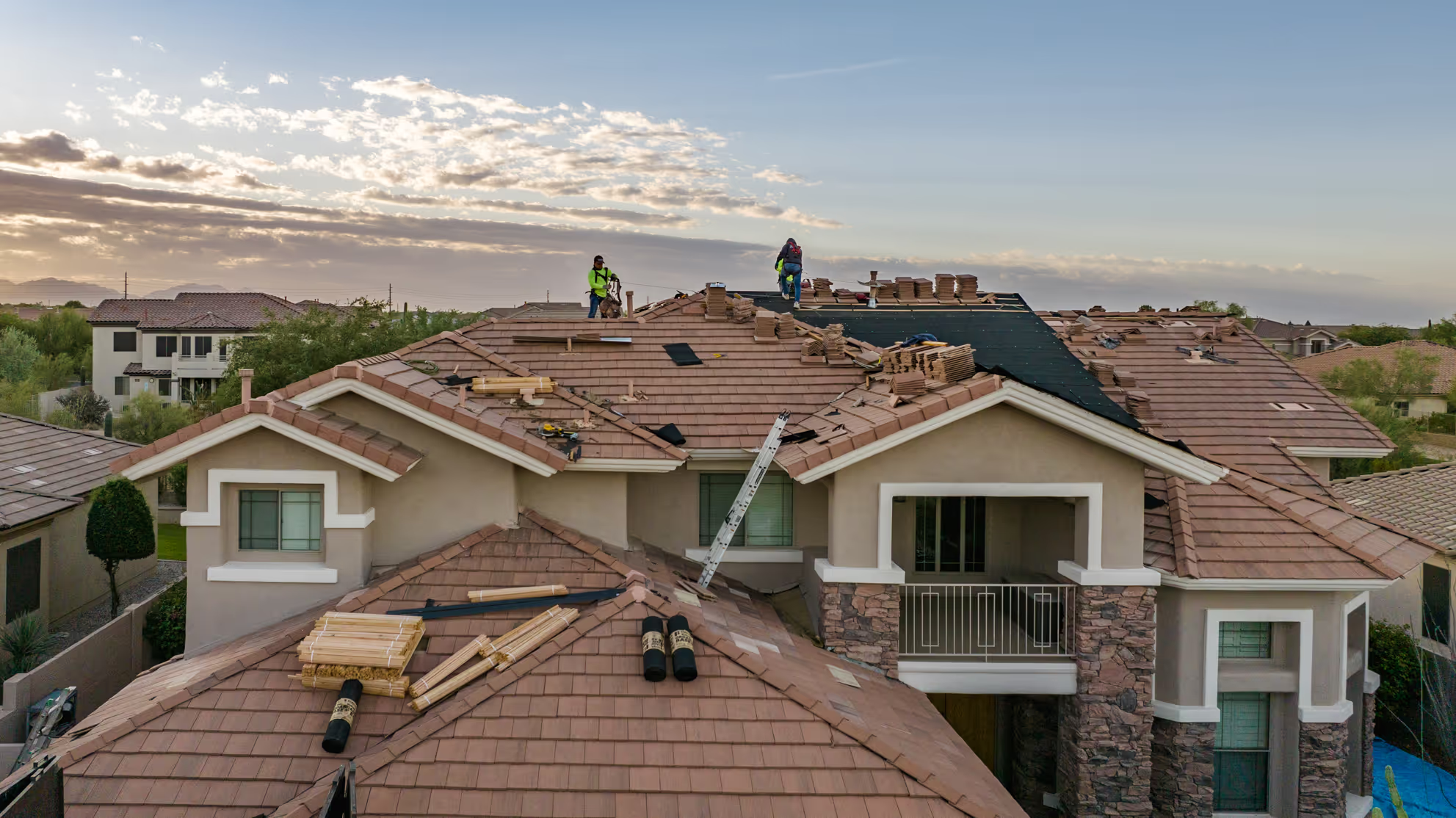
- Underlayment fatigue on tile roofs is common in hot‑dry climates: the tiles may outlast the waterproof underlayment beneath, which eventually needs replacement even if the tile looks fine.
- UV + high temperatures accelerate aging in shingles, membranes, sealants, and plastics. UV breaks molecular bonds; heat speeds oxidation and dries binders, leading to brittleness and cracking.
- Blistering is a known failure mode for flat roofs (built‑up and modified bitumen) when heat expands trapped air or moisture. Catching blisters early prevents leaks.
How hot does a roof get in the summer?
- Dark (non‑cool) roofs: frequently 150–190°F in full sun.
- Light/white cool roofs (high reflectance & emittance): typically 50°F+ cooler than a standard dark roof under the same sun.
- What this means indoors: cooler roofs reduce peak AC load and can lower indoor temperatures in buildings without AC.
The exact number depends on color, material, surface cleanliness, ventilation, and attic insulation. Two surfaces under the same sun can differ by tens of degrees just because one reflects more sunlight and releases heat efficiently (high SRI—Solar Reflectance Index).
What actually keeps a roof cool in an Arizona summer
1) Choose cool roofing surfaces (or add a reflective coating)
- Why it works: High solar reflectance (bounces sunlight) and thermal emittance (re‑radiates absorbed heat) keep the surface cooler. SRI combines both into one “how hot will this get?” score—the higher, the cooler.
- Expected impact: EPA and LBNL report that cool roofs can cut peak cooling demand 11–27% and stay about 50°F cooler than comparable dark roofs on summer afternoons. EPA+1
- Arizona tip: Dust and monsoon soiling dulls reflectance over time; periodic gentle cleaning can restore performance.
Behmer’s Heat-Smart Fixes
Tile roofs: Replace the underlayment (the waterproof layer) when aged—tiles are removed, underlayment upgraded, tiles reinstalled. This restores
- Tile roofs: Replace the underlayment (the waterproof layer) when aged—tiles are removed, underlayment upgraded, tiles reinstalled. This restores water tightness and helps your roof handle Arizona heat.
- Foam (SPF) roofs: Clean, repair, and recoat every ~5 years with a reflective acrylic/silicone topcoat to maintain UV protection and keep surface temps down.
- Flat membranes (BUR/modified/TPO/PVC/EPDM): Keep the system; repair seams and apply a reflective maintenance coating to cut surface temperature and extend service life.
- Metal roofs: Tighten fasteners, reseal seams, and apply a cool-pigment or elastomeric recoat to boost reflectivity and manage expansion/contraction.
2) Ventilate the attic correctly
Attic ventilation limits heat buildup under the roof deck. The International Residential Code (IRC) sets a base net free vent area of 1/150 of attic floor area, with 1/300 allowed when specific balanced high/low venting conditions are met (always check local code). Balanced soffit intake + ridge exhaust is the goal on pitched roofs.
3) Insulate to the right level
Insulation slows conductive heat flow from the roof into living areas. For Climate Zone 2 (metro Phoenix), ENERGY STAR’s retrofit guidance targets R‑49 for uninsulated attics or R‑38 when you already have 3–4 inches. That’s a practical target for many Valley homes.
Behmer fit: On flat roofs, SPF adds meaningful R‑value while making the roof reflective. Behmer applies SPF at ~1 inch with an acrylic UV topcoat; closed‑cell SPF typically delivers about R‑6 per inch (building‑code defaults list ~R‑5.8/inch), which is high among common roof insulations.
4) Leverage materials that manage heat well
Tile roofs: The air space and above‑sheathing ventilation (ASV) under profiled tile can significantly reduce heat flow into the attic—one reason tile performs well in hot‑dry climates.
Metal roofs: With cool‑pigment coatings, metal achieves high reflectance and SRI while resisting Arizona’s UV.
5) Maintain the roof so it can stay “cool”
Keep reflective roofs clean (dust, soot, and biological growth reduce reflectance); gentle cleaning helps restore performance.
Repair small issues early: fix popped laps, deteriorated sealants, and minor blisters before heat turns them into leaks. (Behmer provides inspections and repairs for residential and commercial clients.)
Where Behmer fits in
Behmer Roofing serves homeowners and businesses across the Valley with inspections, repairs, re‑roofs, underlayment replacement, SPF foam & coatings, single‑ply cool roofs, metal, tile, BUR, and modified bitumen—material‑agnostic solutions tailored to Arizona’s heat. If you’d like a roof‑cooling plan specific to your home or building, contact us and we’ll propose options that improve comfort, cut cooling loads, and extend roof life.
Next step: Tell us your roof type (tile, foam/flat, metal, shingle) and your biggest summer pain point (attic heat, high bills, leaks, aging underlayment). We’ll map the quickest, most cost‑effective path to a cooler roof for your part of Arizona.